Designing a configurable system to improve data quality, scalability, and team velocity.
TL;DR
Cleaner intake guidance
Self-serve configuration updates
Faster iteration and projected 30+ days of dev savings per major update
Context & Stakes
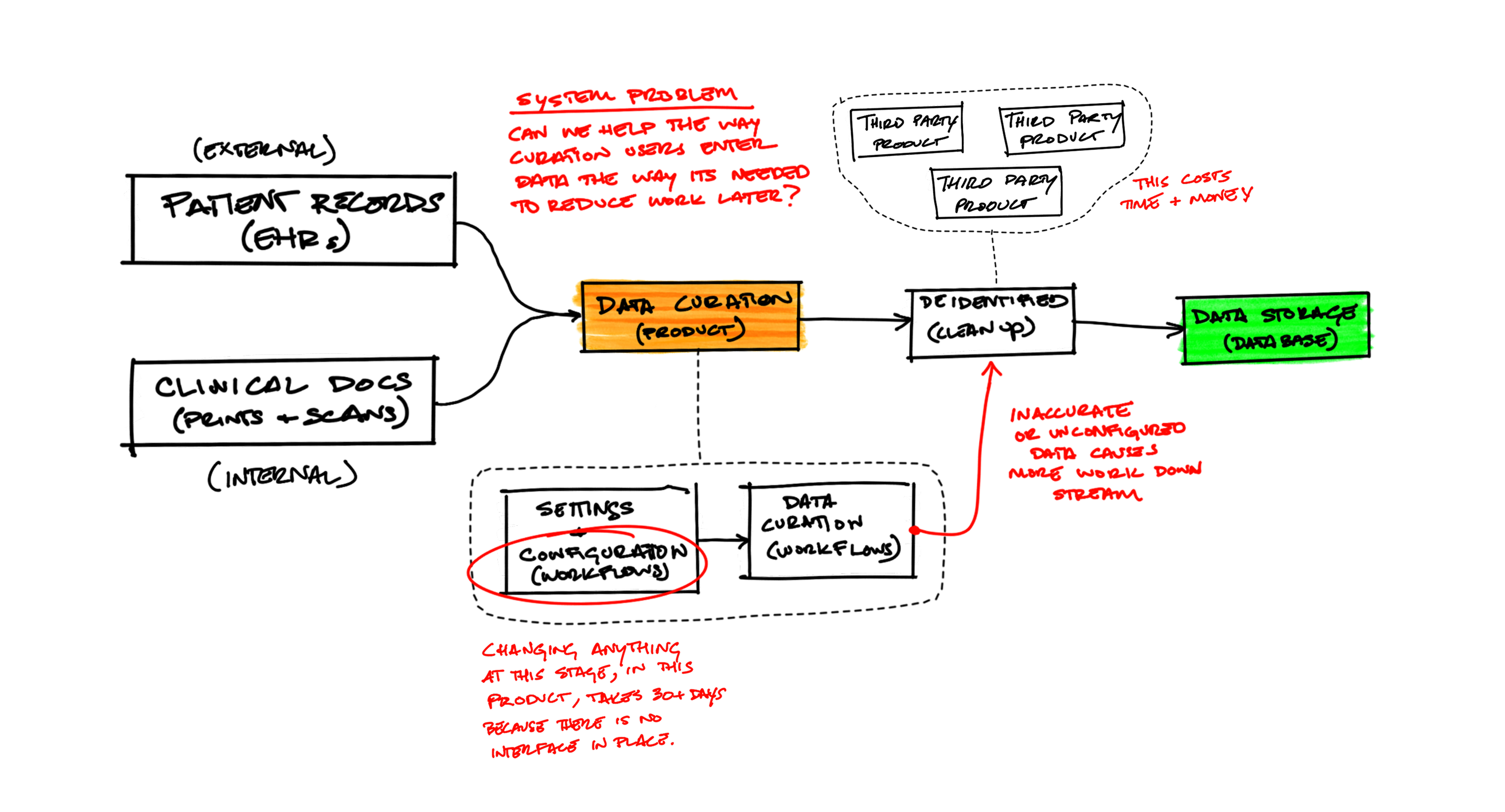
Improving data quality through structured configuration for the point-of-intake
This work lives inside a patient data curation platform used to extract information from electronic health records and clinical documents for de-identification and analysis. Because downstream analysis depends heavily on the quality of curated data, inconsistencies introduced during intake create compounding cost and operational risk later.
As the platform evolved, the complexity wasn’t limited to data alone. Any change to how data was collected required engineering effort, and the UI needed to support increasingly dense configuration requirements. Adding or modifying field groups, individual fields, dropdown options, or logic typically took 30+ days of development, making iteration slow and the configuration experience brittle.
- 30+ days of development per configuration change
- High data and UI complexity at the configuration layer
- Foundational bottleneck to scale and iteration
Role & Leadership
Leading clarity across logic, structure, and UI design
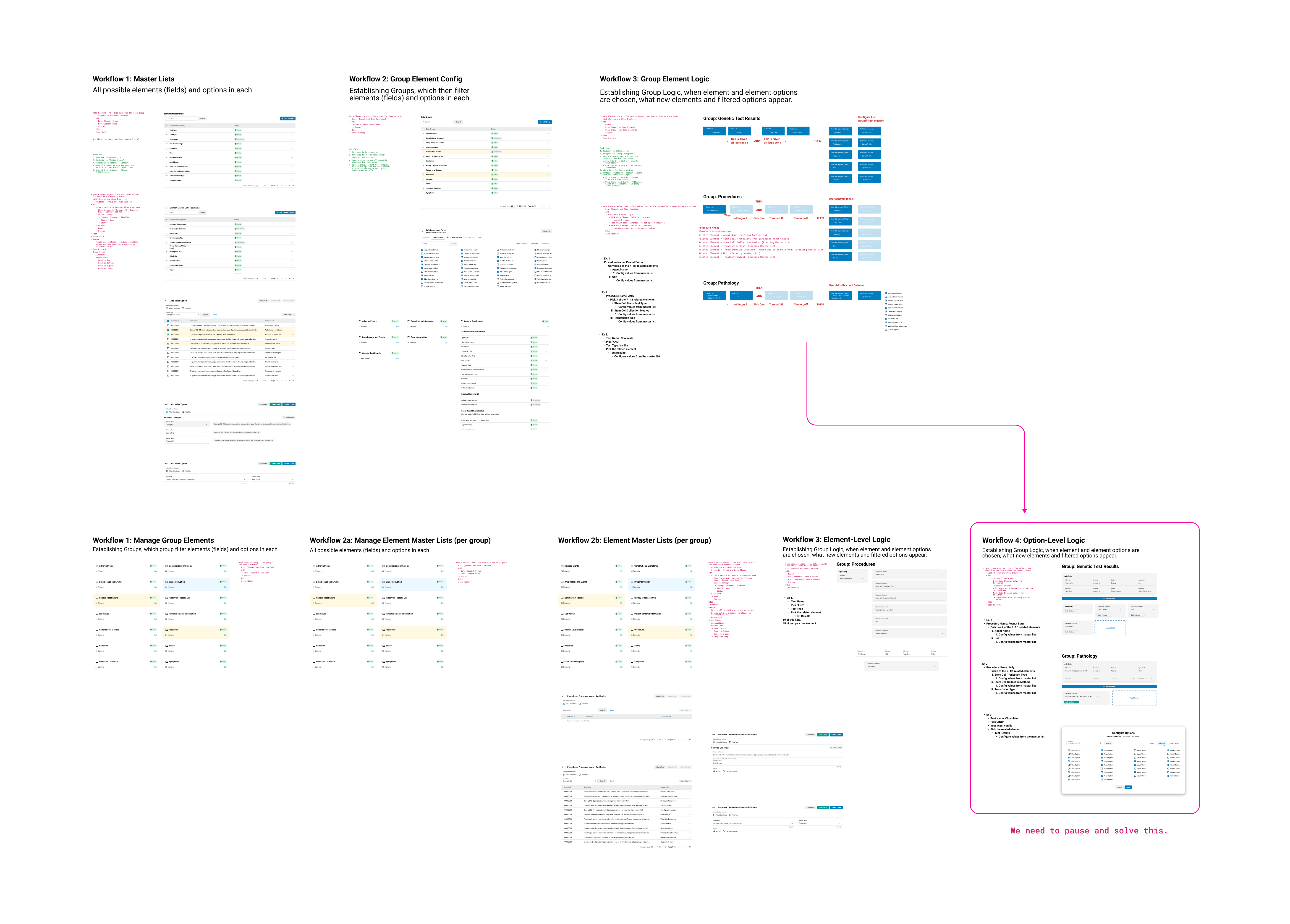
As the staff designer, I owned all design decisions for this feature end to end, including workflow definition, logic configuration patterns, and UI design. The challenge was not only defining how data elements should relate, but also presenting a large amount of configuration information in a way that remained understandable and accessible to non-technical admin users.
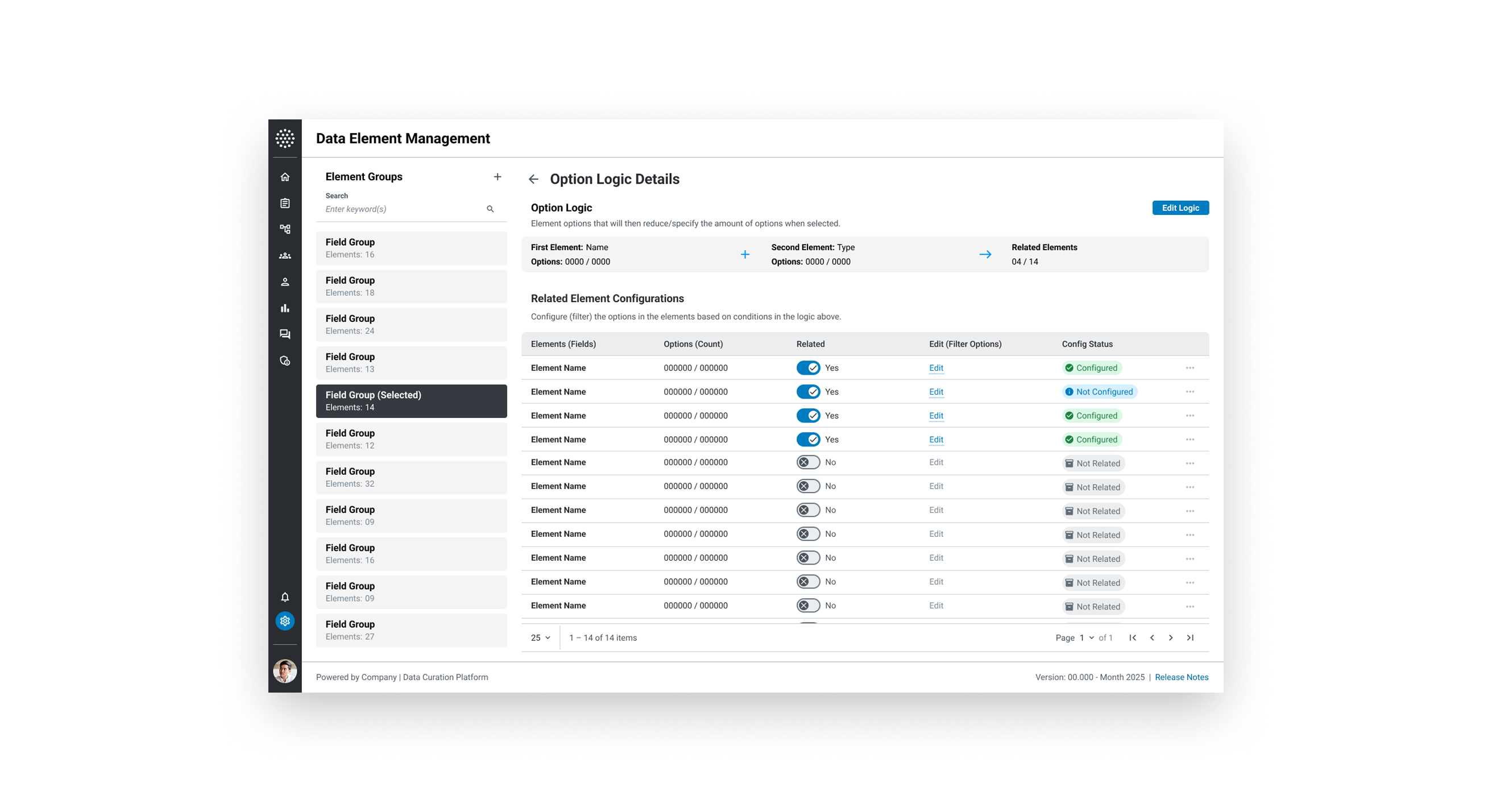
As the UI evolved, two challenges became clear: how to surface field groups, fields, and field options without overwhelming users, and how to guide them from high-level configuration views into detailed logic editing without losing navigation context. These challenges directly contributed to my decision to pause execution, regroup around structure and relationships, and then reassemble the UI with clearer hierarchy and flow.
Let's take a moment...
UI complexity and logic configuration challenges surfaced the need to pause and realign on structure before proceeding.
Process & Key Moves
Designing clarity across dense configuration workflows
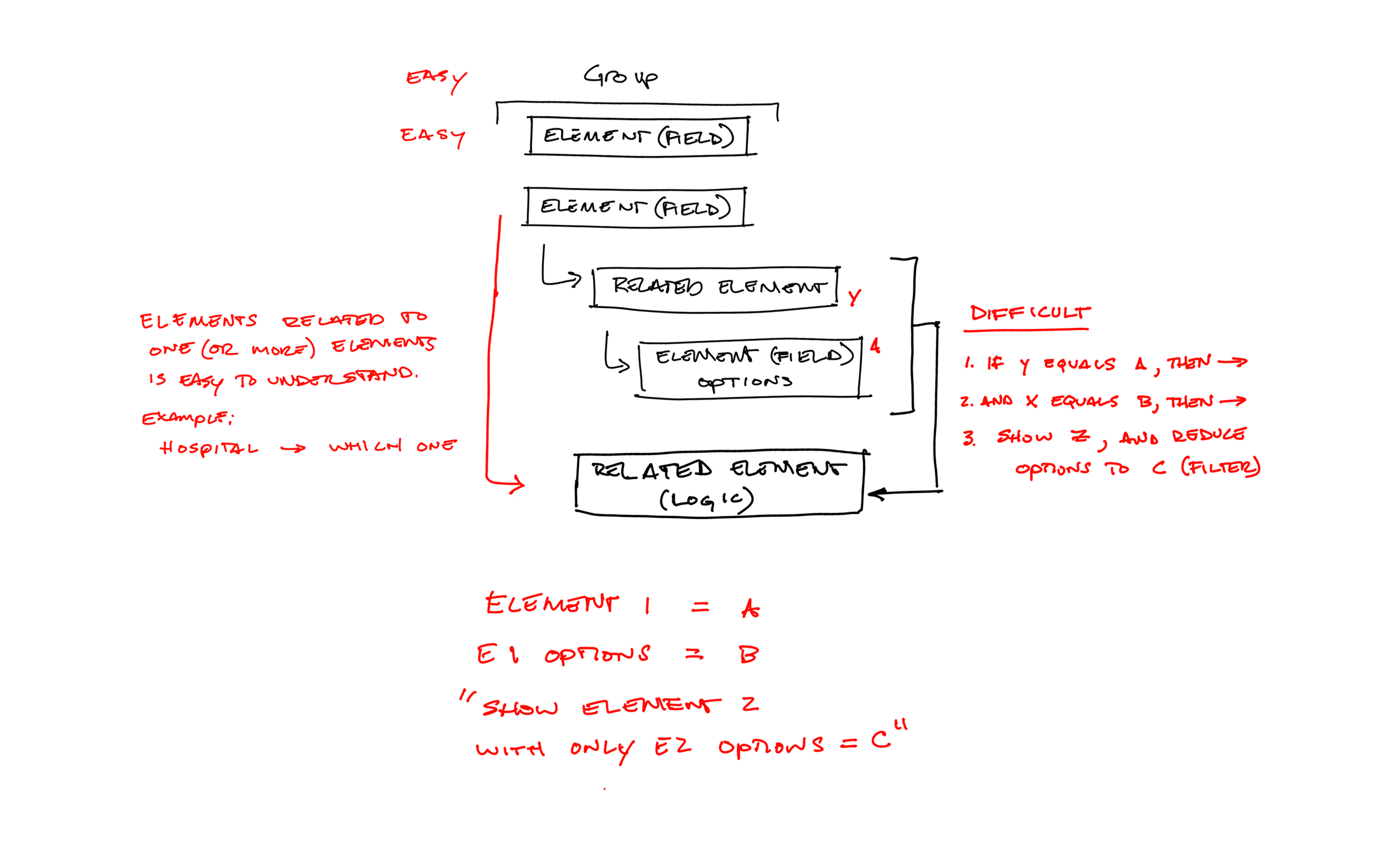
The most impactful shift in the project was moving from screen-level solutions to relationship-level thinking. By mapping how field groups, individual fields, options, and conditional logic related to one another, the team gained a shared understanding that informed both workflow and UI design decisions.
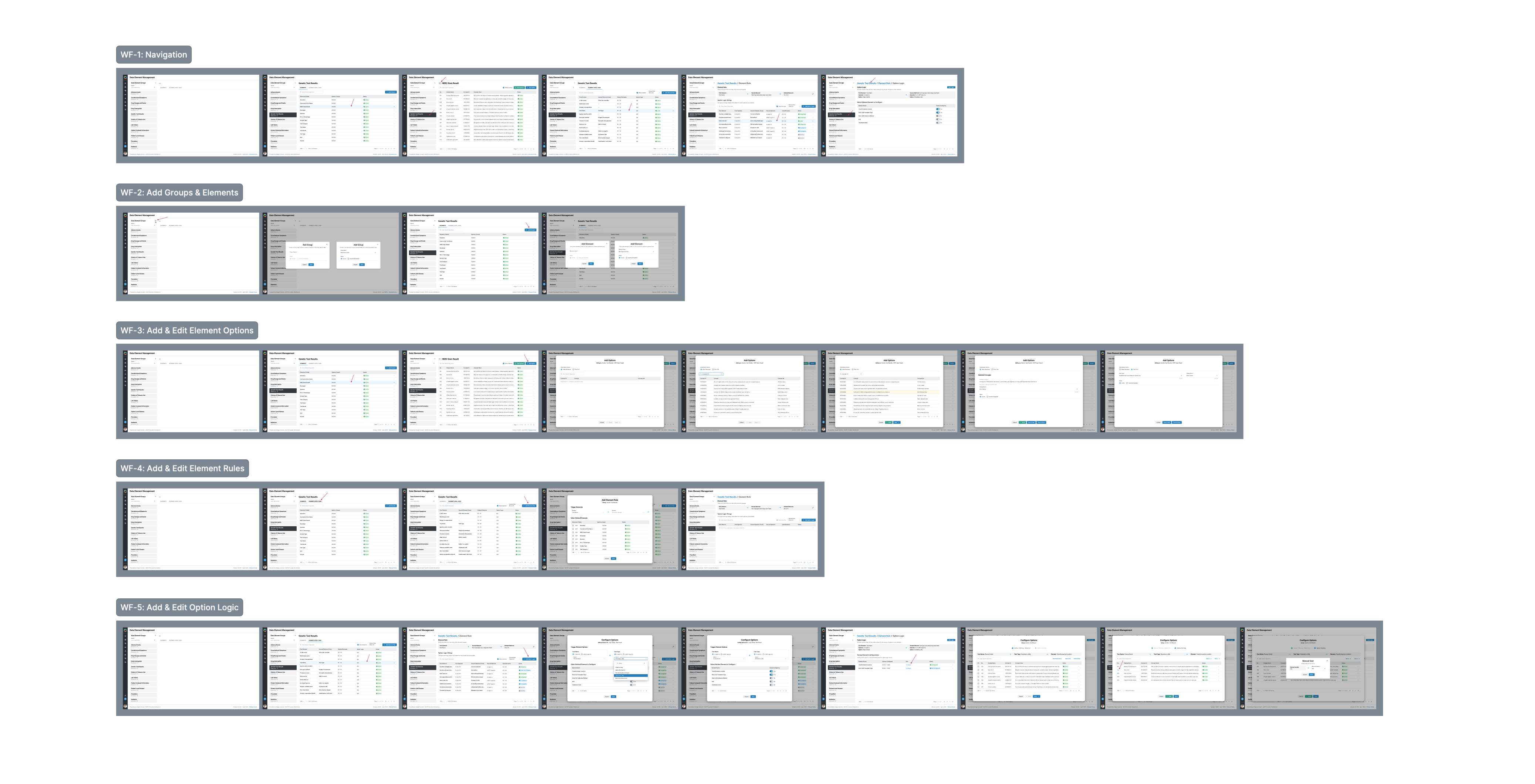
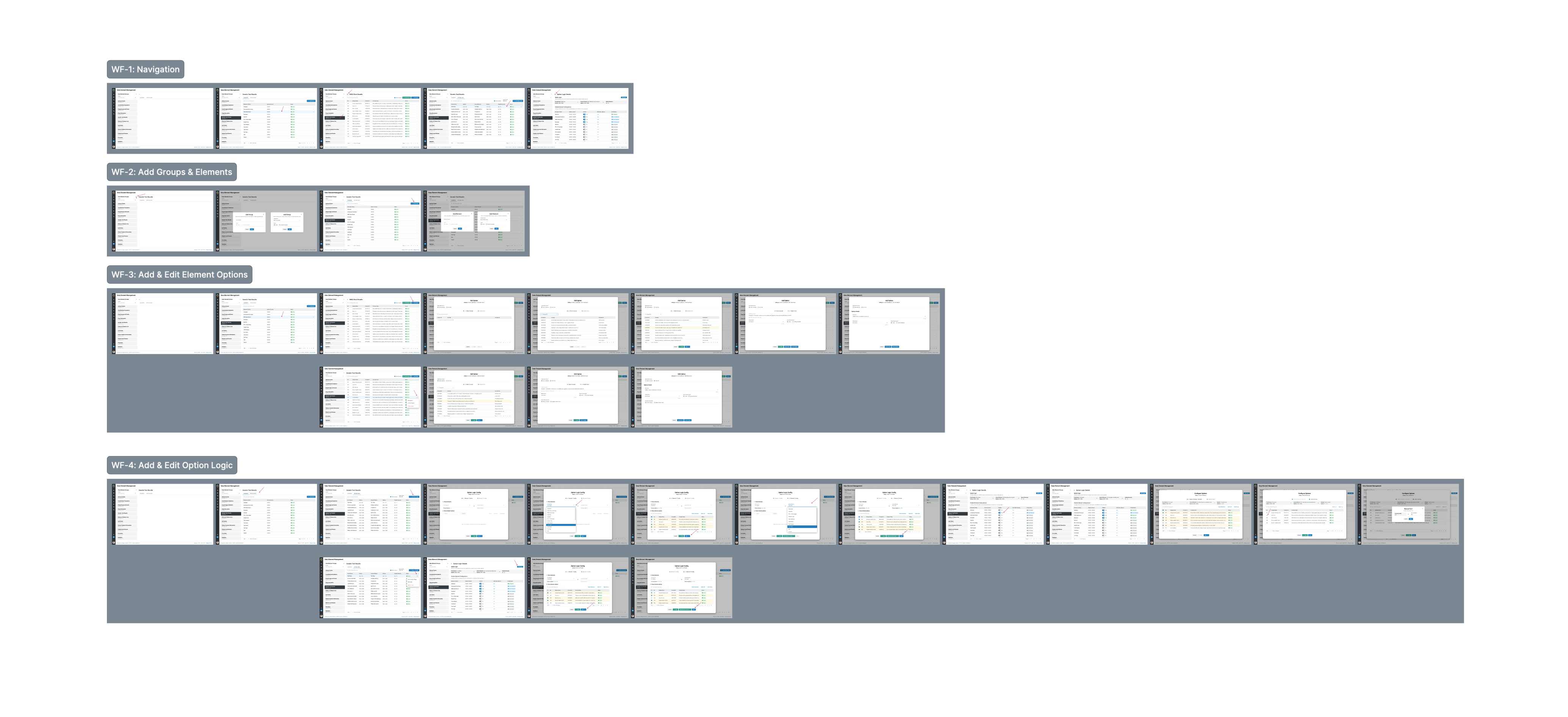
This structural clarity enabled the UI to be organized progressively, guiding users from high-level group management into deeper field and logic editing without disorientation. Early concepts separated logic configuration into multiple workflows, but through iteration these were consolidated, reducing five to seven workflows down to four while improving visual hierarchy, navigation clarity, and overall usability.
- Information-dense UI organized through hierarchy and progressive disclosure
- Admin workflows reduced from 5–7 to 4
- Navigation clarity preserved across configuration depth
- Validated with SMEs via Figma mockups
Outcomes
A configurable foundation for faster updates and cleaner data intake
This system enables admin users to manage data element groups, input fields, field options, and logic configurations without relying on ongoing engineering support. Once fully adopted, it is projected to save over 30 days of development effort per major configuration change, reducing both cost and time to iteration.
By guiding curation users toward required inputs and standardized options, data quality improves at the point of intake. This helps minimize downstream cleanup and normalization workflows while giving the product a more flexible foundation for future curation needs.
- Projected 30+ days of development savings per major configuration change
- Reduced engineering dependency for field, option, and logic updates
- Improved data quality by guiding cleaner input at the point of intake
- Created a scalable configuration framework for future workflow changes
Reflection
This project reinforced the value of spending time early on information structure before moving too deeply into interface design. The most important shift happened when we paused to map the relationships between field groups, fields, options, and logic configurations.
That short reset helped turn a dense configuration problem into a clearer, more navigable experience for admin users. What surprised me most was how intuitive the final workflows became once the underlying relationships were visible.