Designed shared platform structure to align products, simplify navigation, and prepare for scale.
TL;DR
Established platform-level structure across multiple products.
Designing global navigation and structural patterns that products could align to.
Improved cross-product consistency and a renewed focus on a unified design system that accelerated team velocity.
Context & Stakes
From fragmented products to a shared platform foundation
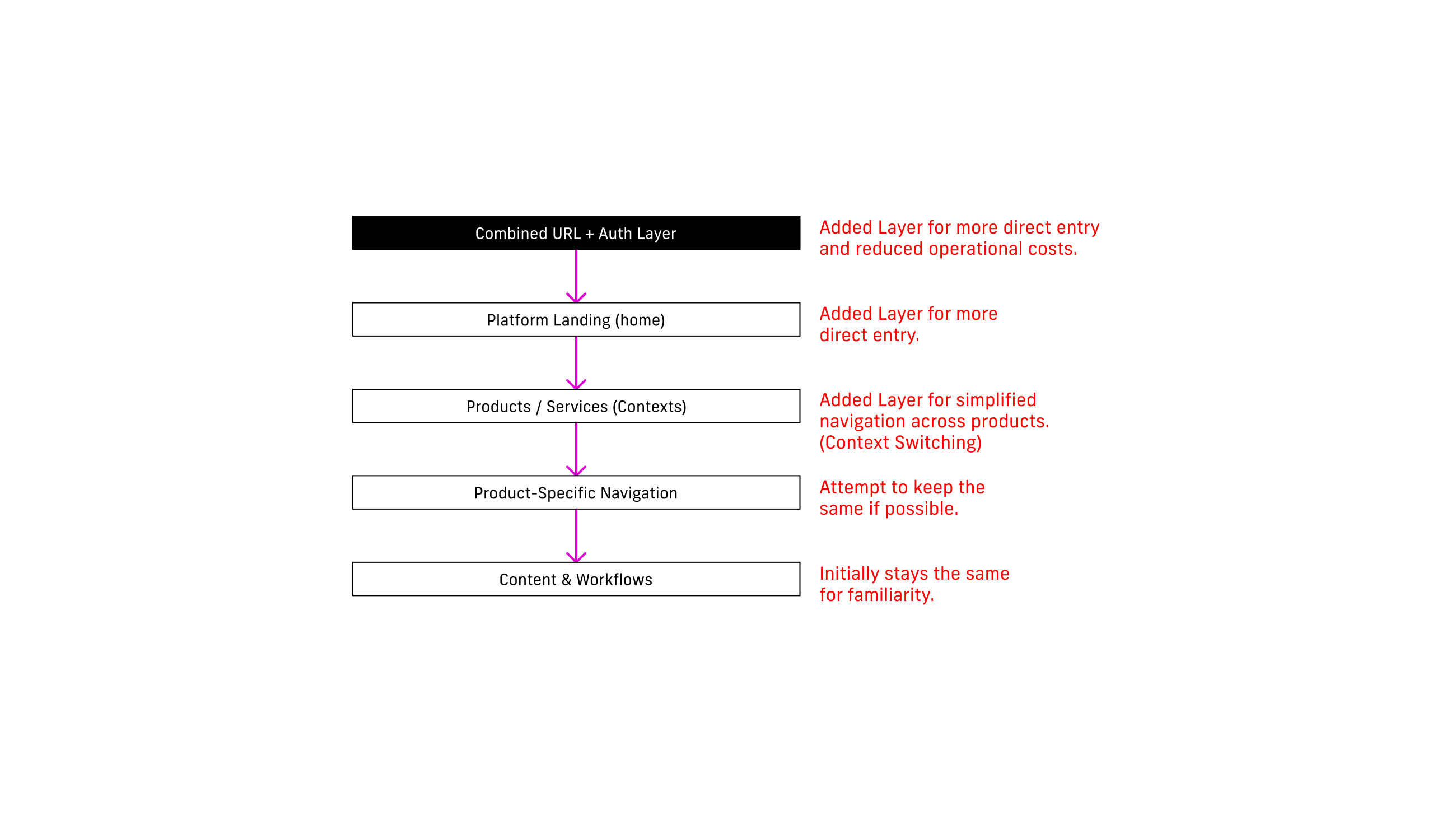
Intelligence 2.0 was designed as a unifying platform that would sit above Integra Connect’s growing product ecosystem. Rather than another standalone application, it established a single entry point where users could access products, manage accounts, and understand permissions across solutions.
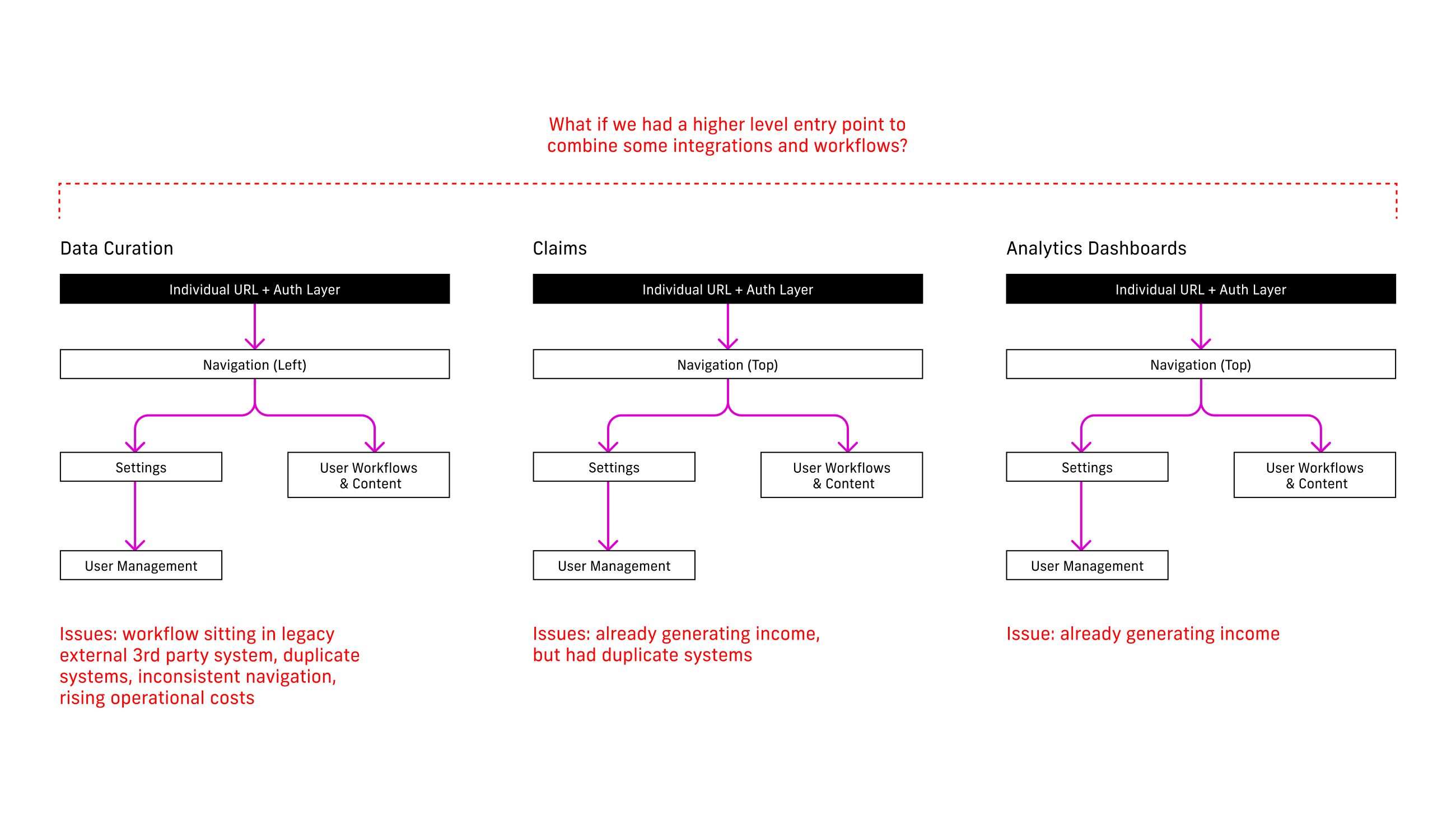
The existing state was increasingly difficult to sustain. Multiple teams maintained separate authentication systems, user management areas, and third-party integrations, creating inconsistent experiences, rising operational costs, and long-term scalability risk. Intelligence 2.0 represented an opportunity to establish shared platform foundations that could reduce fragmentation now and support growth over time.
- This problem mattered now as teams were independently solving the same platform problems at the same time.
Role & Leadership
Platform ownership through systems thinking
I worked on Intelligence 2.0 as a Staff Product & UX Designer and Director of Design, owning the platform’s information architecture and global navigation. My responsibility centered on defining how users moved between products, contexts, and shared areas such as settings and administration.
I partnered closely with a Product Manager responsible for Intelligence 1.0 to balance platform progress with legacy constraints tied to revenue-generating analytics. Leadership on this project often meant restraint. Rather than redesigning everything at once, I focused on establishing a clear platform layer while allowing product-specific navigation and settings to remain intact where appropriate.
- Owned global navigation and platform information architecture
- Influenced platform strategy beyond UI artifacts
- Balanced unification with legacy risk and team capacity
- Created shared structural models for future product migration
Process & Key Moves
Reframed fragmentation as a platform problem, using information architecture and familiar patterns to create clarity and scale.
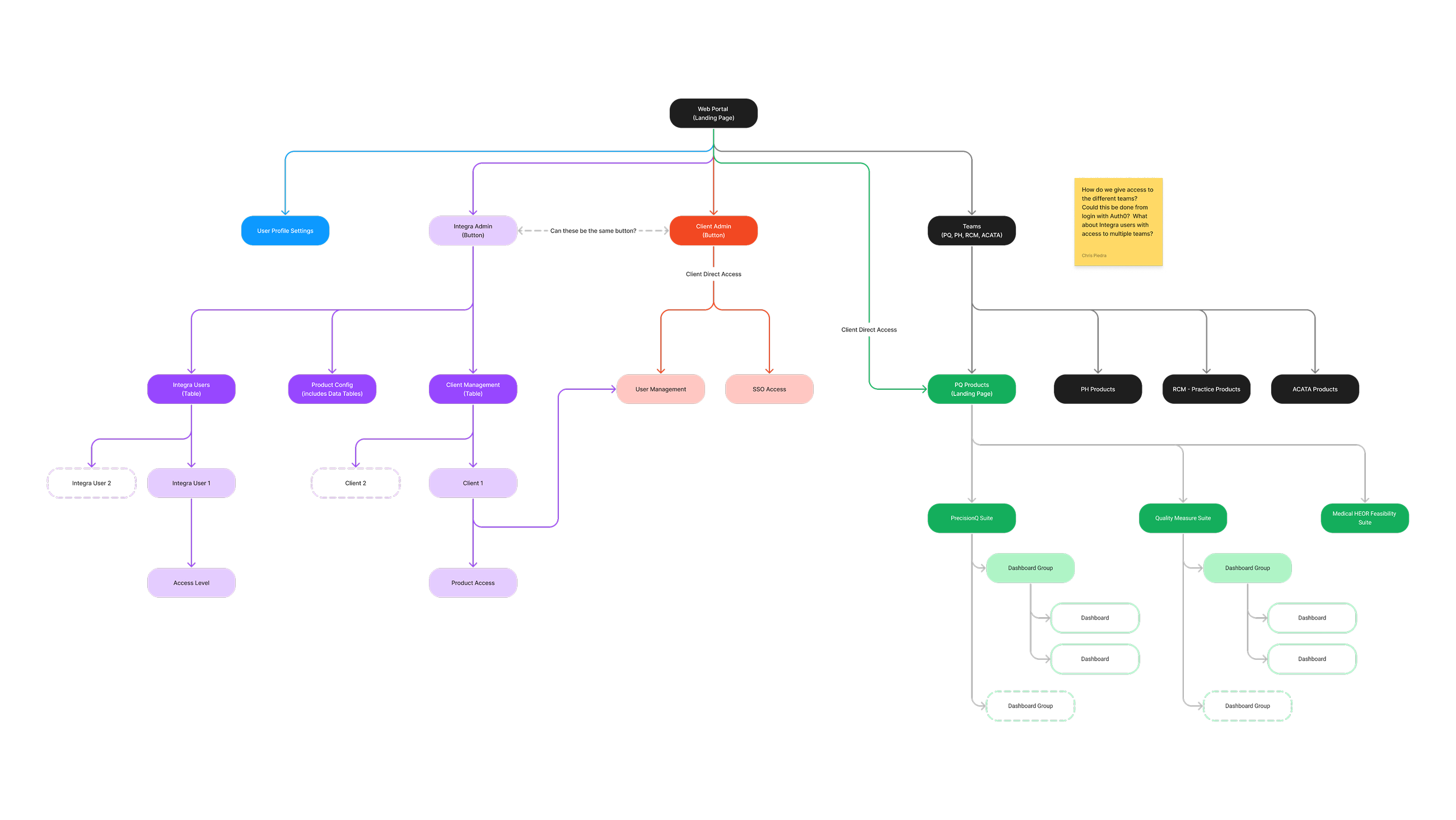
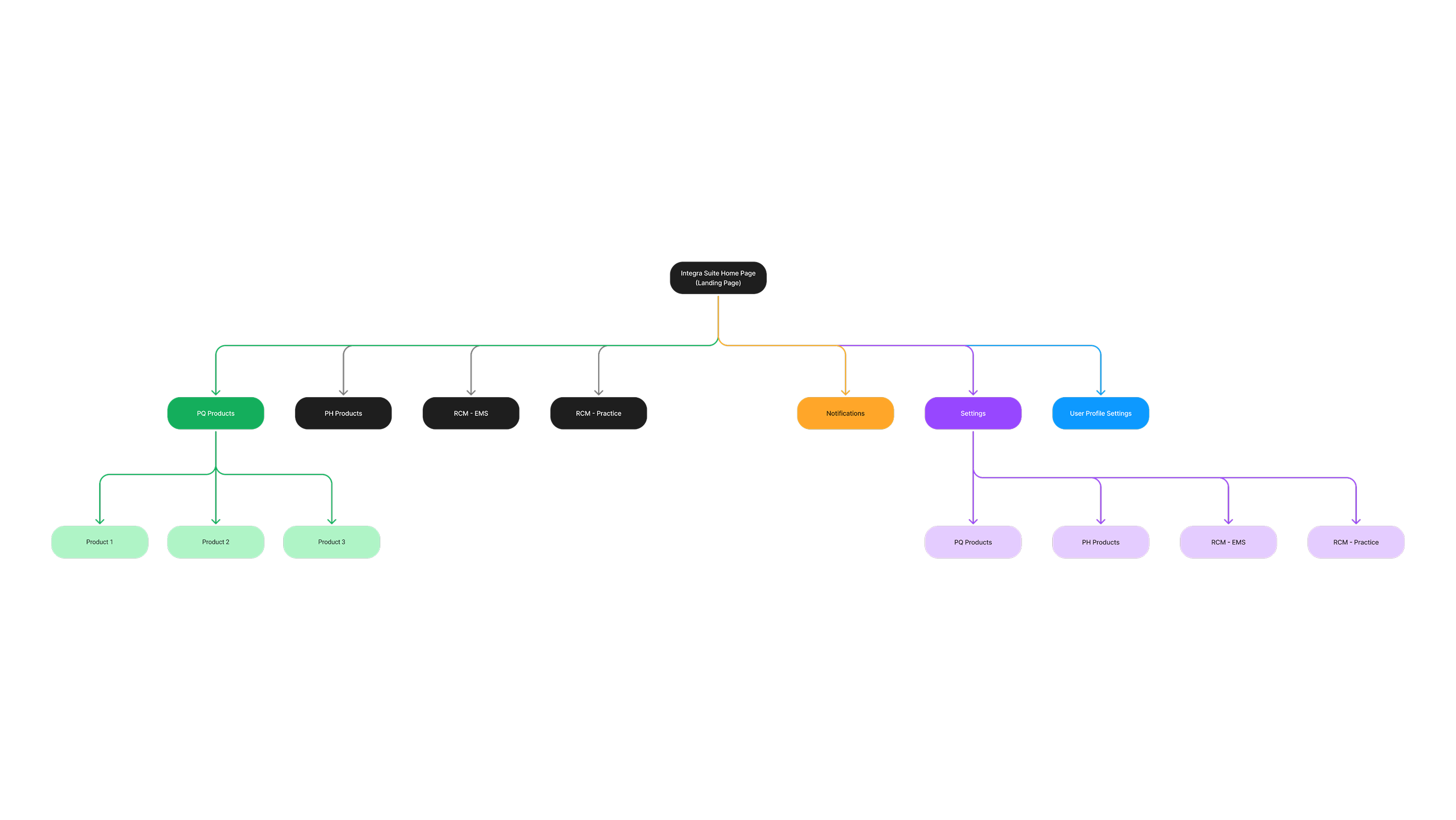
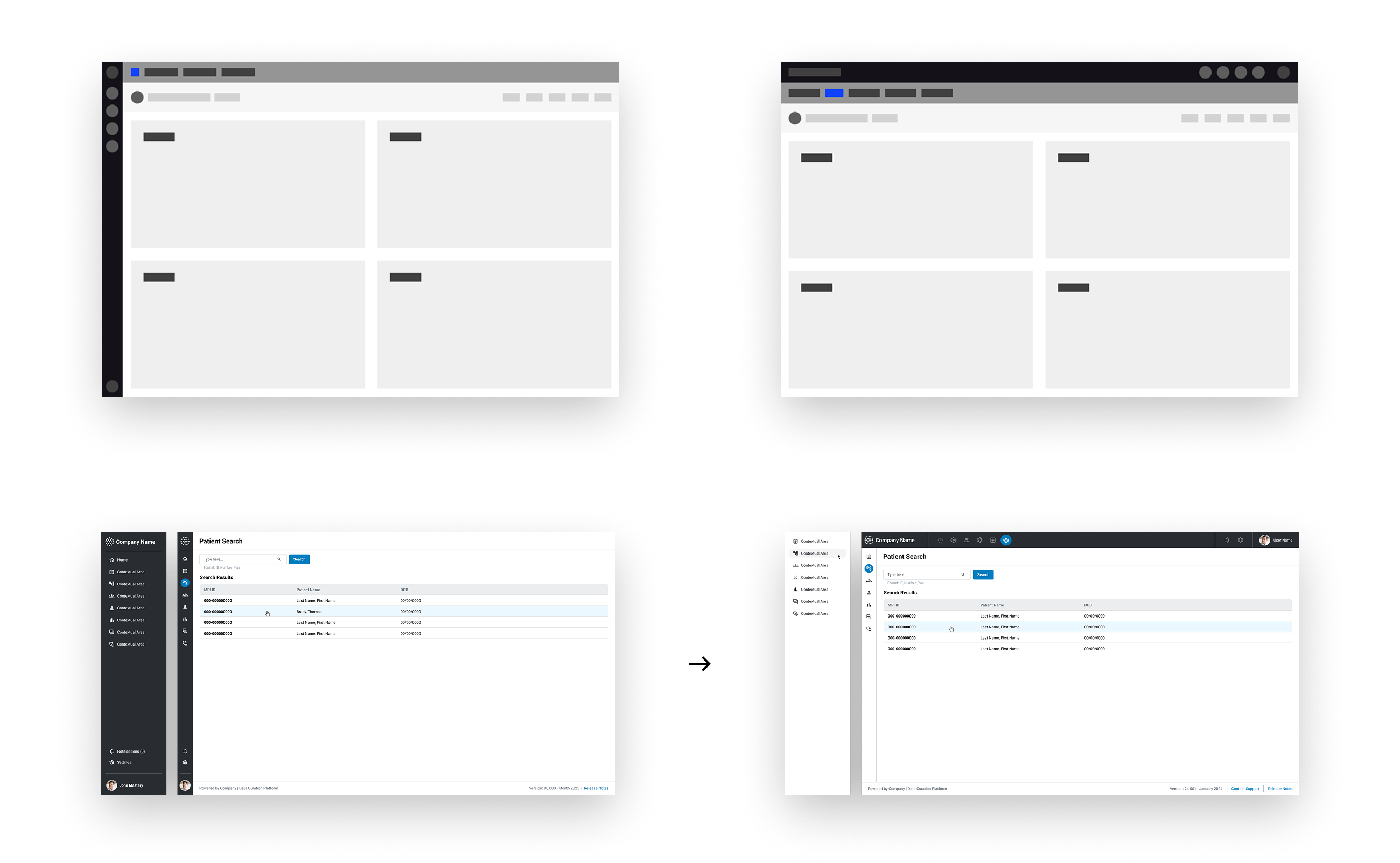
I approached Intelligence 2.0 as an organizational problem first, focusing on goals and grouping information and actions into high-level buckets before designing interfaces. Information architecture became the primary tool for defining how users would move across products and for aligning teams around shared structure and ownership.
Key decisions favored familiarity over novelty. I reused established navigation patterns from other Integra Connect products and introduced a landing experience to better manage performance expectations. Together, these choices reduced cognitive load, reinforced trust, and allowed the platform to feel cohesive without forcing premature unification.
- Framed the problem around platform structure, not UI
- Used IA diagrams to align teams and guide decisions
- Introduced a landing experience to manage performance perception
- Reused familiar navigation patterns to reduce adoption risk
Outcomes
Platform foundations that unlocked scale and design velocity
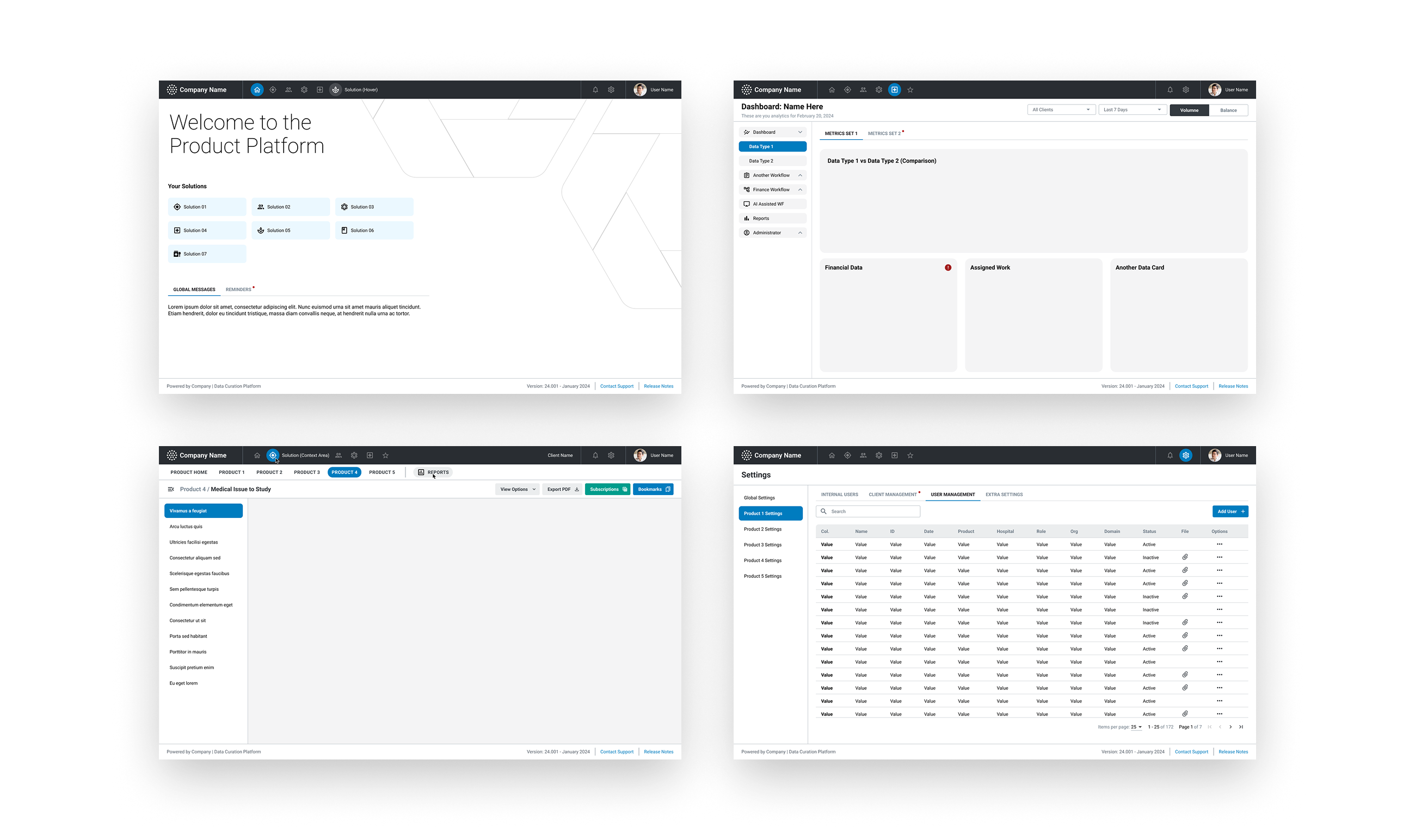
Intelligence 2.0 established shared platform foundations that reduced fragmentation across Integra Connect products. Global navigation and settings patterns created a consistent structural framework that teams could build against, even as products continued to migrate at different speeds.
For users, navigation clarity improved across migrated products. Entry into heavy analytics experiences became more intentional, reducing perceived performance issues and restoring trust during loading moments. For internal teams, shared platform patterns simplified cross-product reasoning and collaboration.
- Defined global navigation and settings patterns across multiple products
- Reduced duplicated authentication and third-party integration costs
- Improved perceived performance through intentional entry points
- Established a platform ready to accept future products
Reflection
One of the most meaningful impacts of this work was the renewed focus it placed on the global design system. As Intelligence 2.0 exposed the need for shared components and consistent patterns, the design team shifted toward a more disciplined, platform-first system strategy. That shift directly improved design and development speed across products, including those not yet migrated into the platform.
This project reinforced the value of systems thinking and strategic patience. Rather than forcing full unification prematurely, progress was made by establishing foundations, aligning patterns, and allowing momentum to build incrementally. Intelligence 2.0 is still evolving, but the decisions made here continue to shape how the platform and design organization scale together.