From external tooling to an internal system for faster, higher-quality clinical data curation
TL;DR
I redesigned clinical data curation into a system-level experience
Replacing fragmented, external workflows with a reusable internal data entry framework
A faster, more accurate curation that reduced patient processing time from days to hours
Context & Stakes
From fragmented workflows to scalable clinical data curation
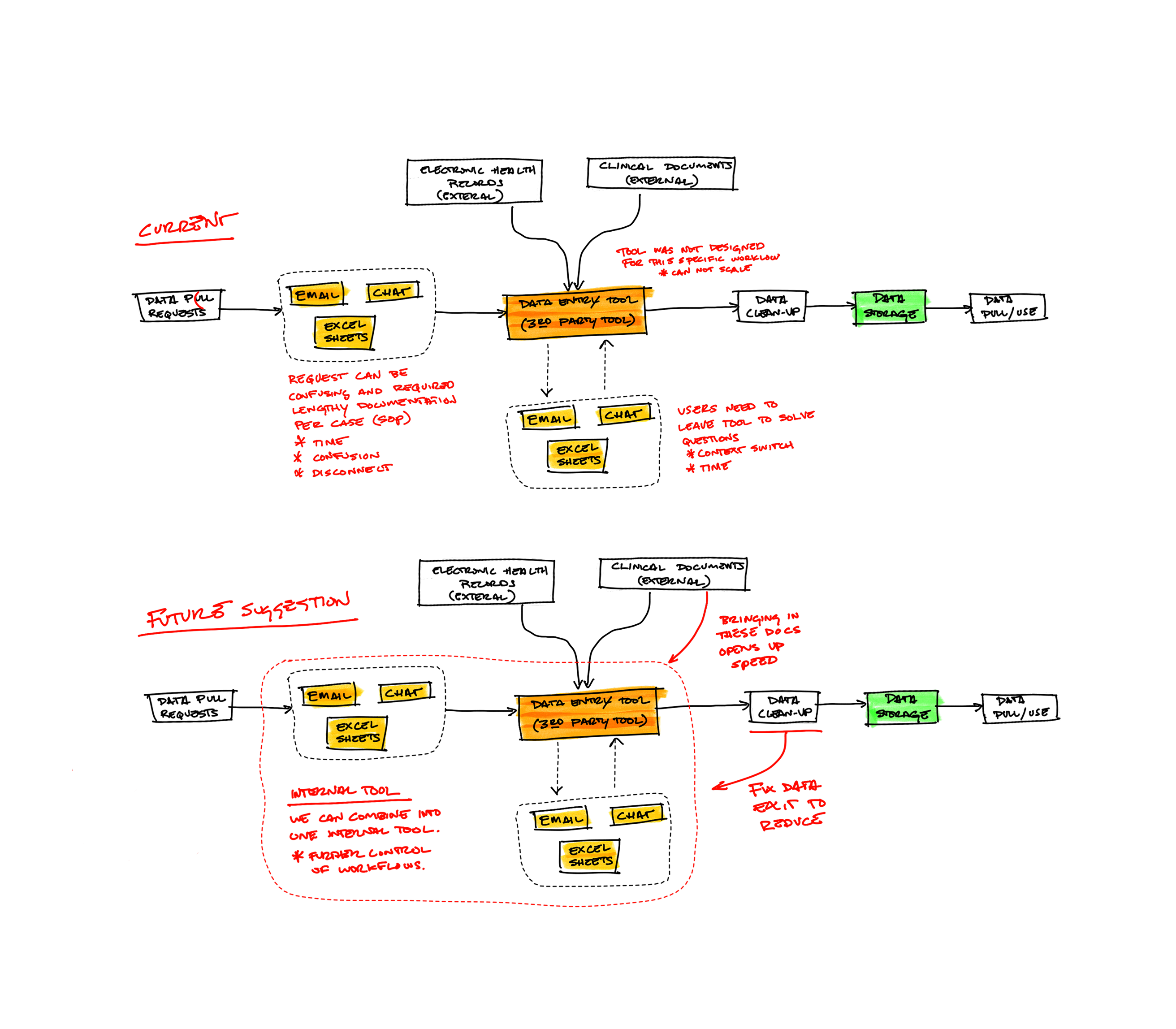
Clinical data curation relied on a third-party tool that was never designed to support the growing complexity of real-world clinical workflows. As requirements expanded, work became fragmented across systems, forcing users to rely on offline steps and workarounds to complete a single task.
These disconnects introduced inefficiency, increased the likelihood of errors, and slowed data extraction at scale. Curation regularly took days per patient, creating operational risk and limiting how much data could be reliably consumed downstream.
- Curation was taking days per patient and could not scale.
Role & Leadership
Staff Designer driving system-level clarity
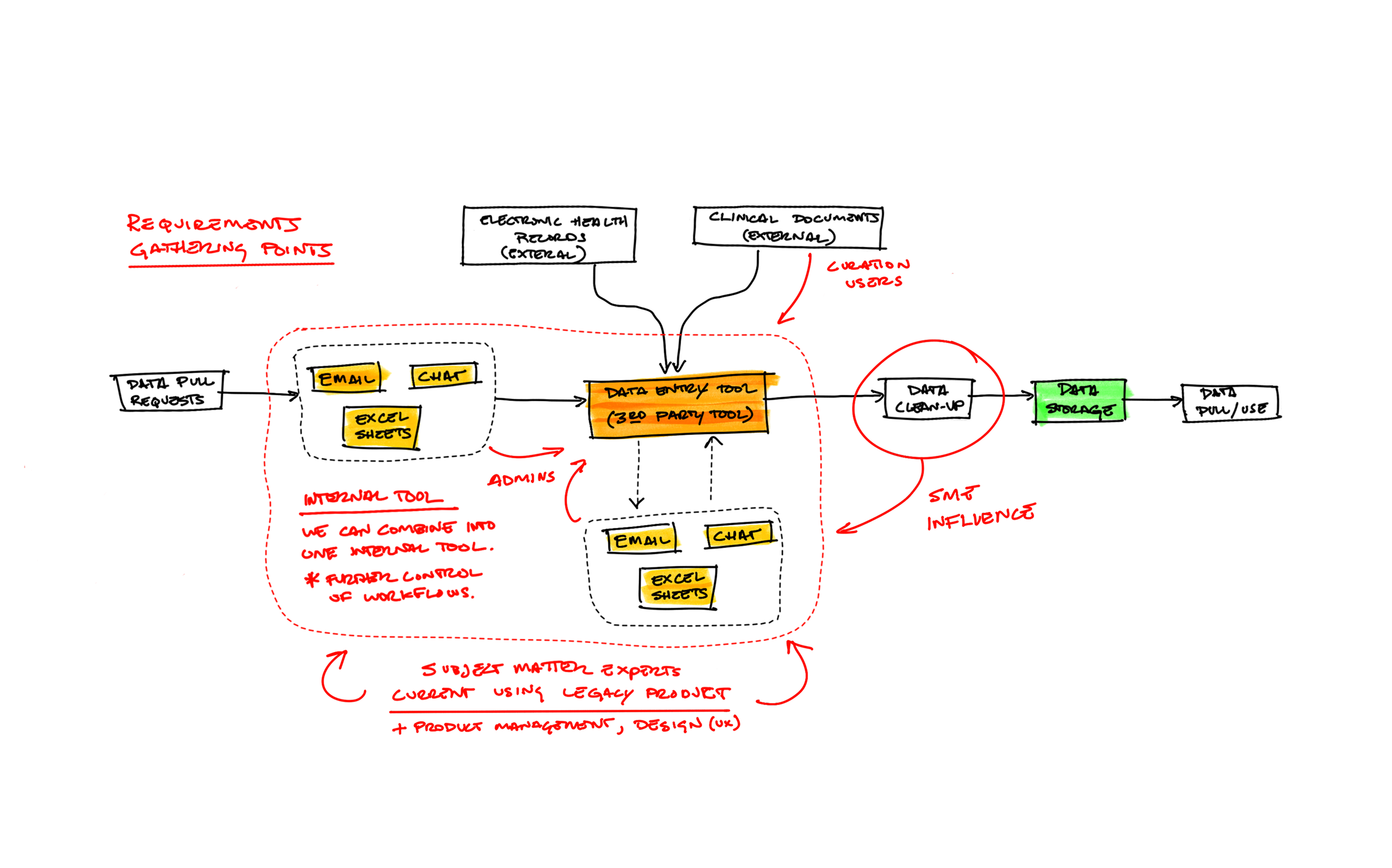
As the Staff Product Designer, I led the end-to-end design of the internal curation experience, with responsibility for how curation fit into the broader platform. My role focused on creating clarity across workflows while validating design decisions that needed to scale beyond a single feature.
I partnered closely with product managers, subject-matter experts, and design peers to align on both near-term delivery and long-term system strategy. By grounding early decisions in familiar internal patterns and later visualizing workflow gaps, I helped shift conversations from isolated features toward system-level efficiency.
- Design ownership and validation
- Cross-team alignment and reframing
- System-level workflow clarity
Process & Key Moves
Reframing curation as a reusable system
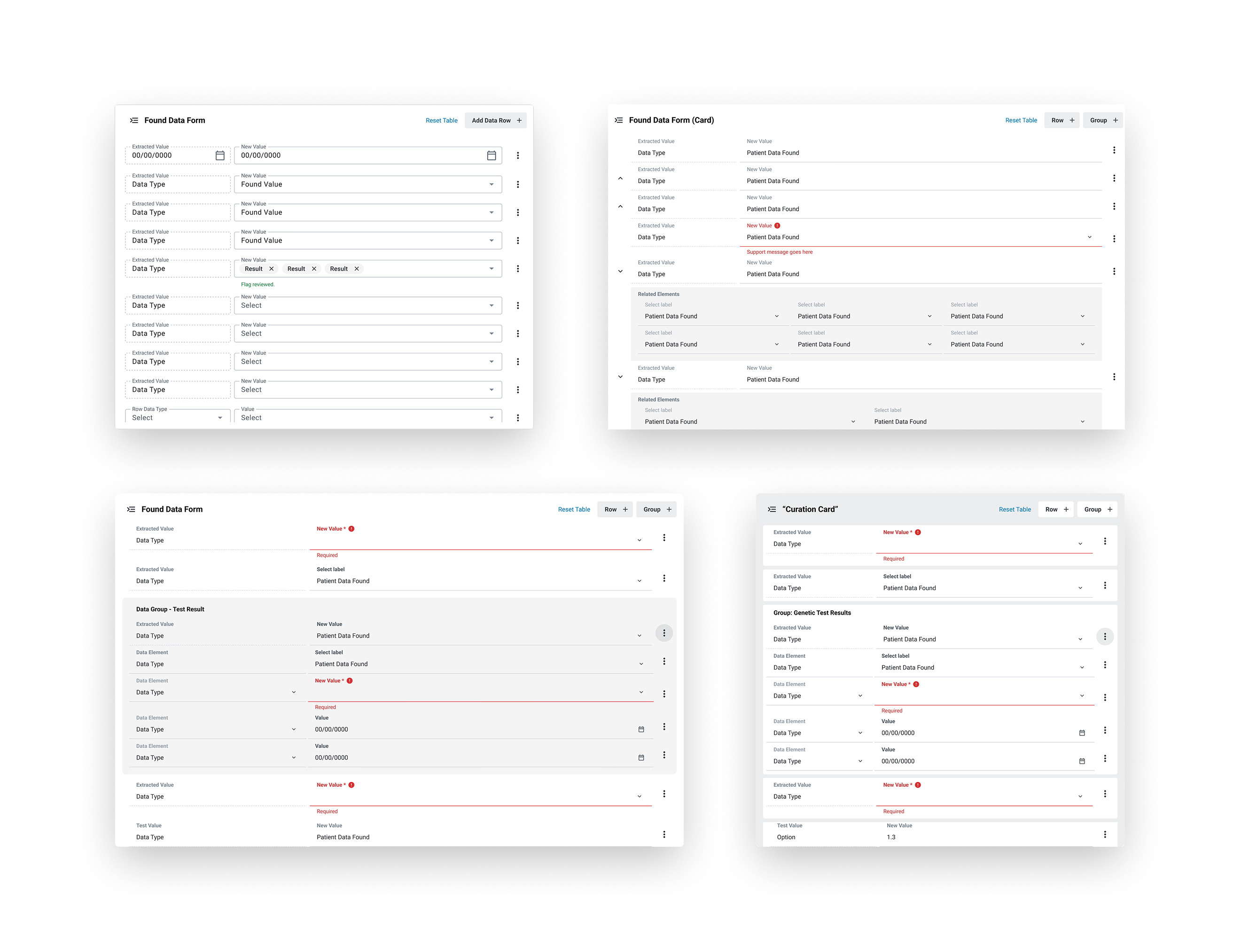
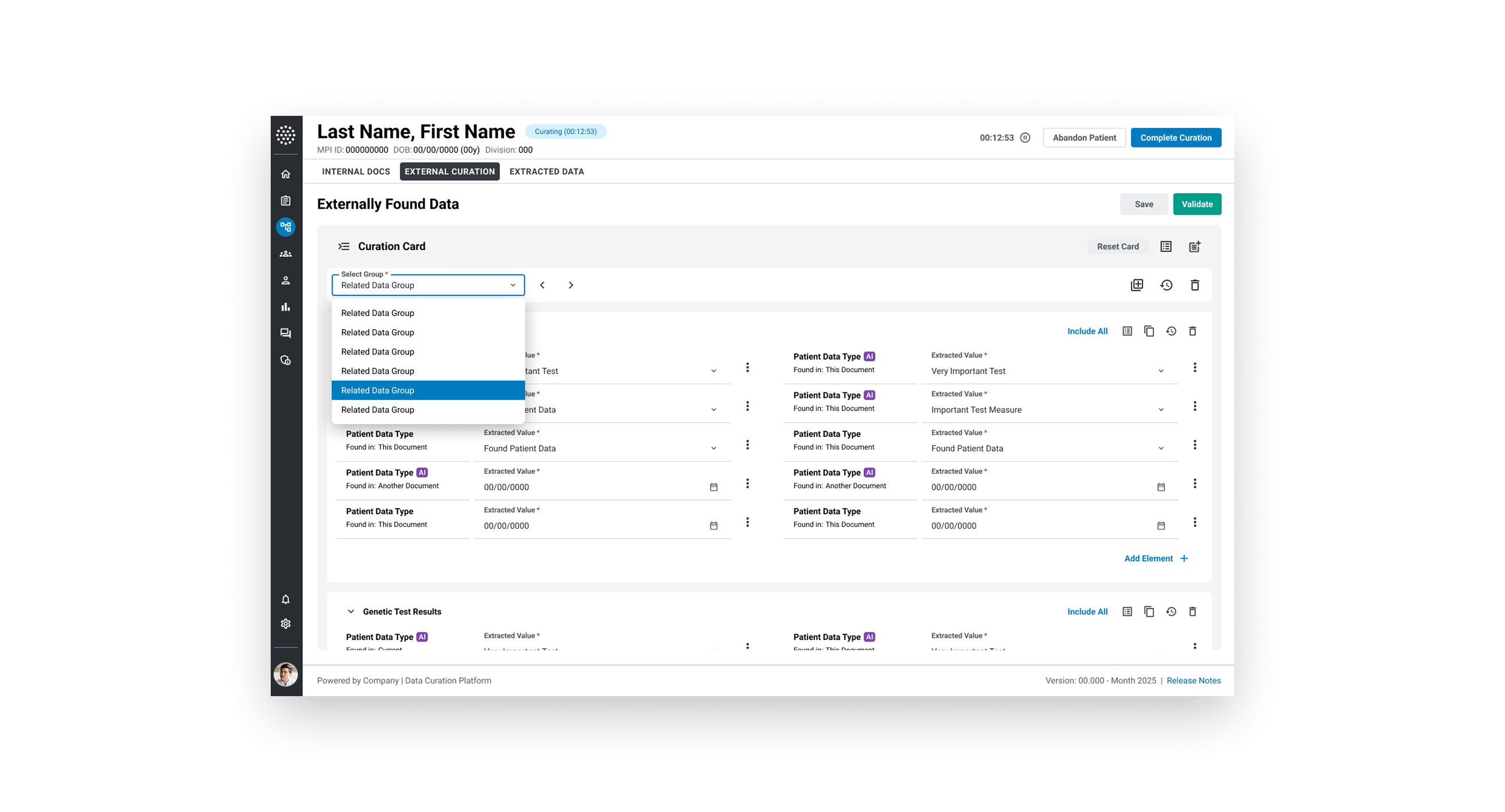
Rather than recreating legacy workflows inside a new tool, the design focused on the core job users needed to accomplish: efficiently entering and validating clinical data. The experience was anchored around a single, reusable data entry surface that users already understood, reducing friction and cognitive load.
This reframing allowed manual entry, review, and assisted workflows to coexist within one cohesive system. Familiar patterns provided stability, while flexibility in configuration allowed the workflows to evolve as data sources, roles, and requirements changed.
“reuse the workflow” → “redesign the system”
Outcomes
From days of curation to hours, with a stronger foundation for scale.
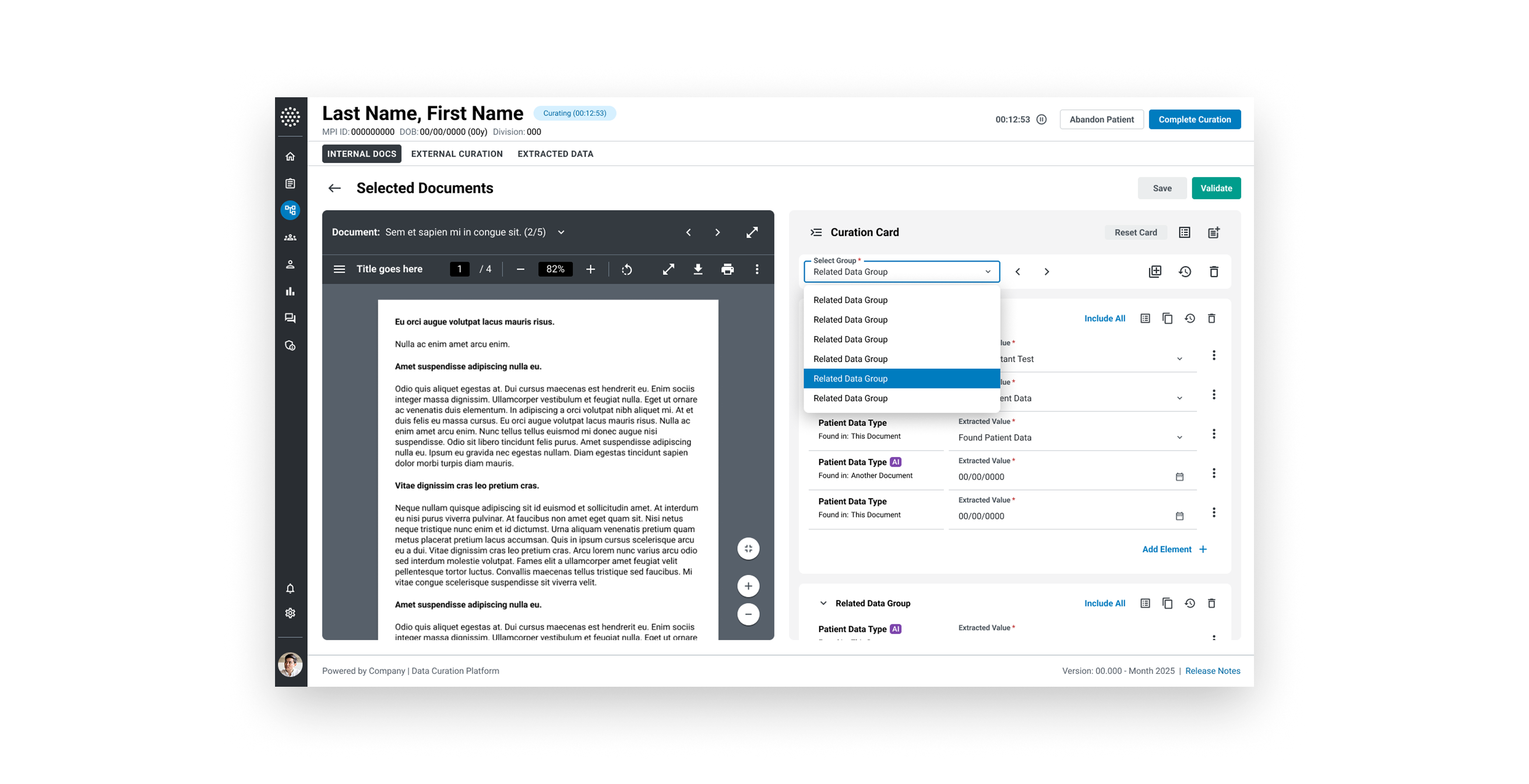
The redesigned curation experience reduced patient processing time from multiple days to approximately three to four hours per patient. By bringing data entry, review, and correction workflows into the platform, users could complete more of their work in one connected experience instead of relying on disconnected tools, email, chat, or spreadsheets.
The impact was both operational and strategic. Faster curation increased throughput, while clearer in-product audit workflows helped users identify and resolve errors more efficiently. The work also created a reusable foundation that could continue supporting new data sources, workflow types, and future platform improvements.
- Reduced patient curation time from multiple days to approximately 3–4 hours per patient
- Increased operational throughput by reducing manual and offline workflow steps
- Improved data quality by making audit feedback and correction workflows easier to manage inside the platform
- Established a reusable curation framework that supports future scale across workflows and data sources
Reflection
This project reinforced that the most important design decisions were not only about the curation card itself, but about how the surrounding system helped users stay oriented, accurate, and efficient. Treating the component as part of a larger workflow led to better questions, clearer tradeoffs, and more reusable design patterns.
With more time, I would have pushed earlier on certain structural decisions, especially around navigation within the curation area. The work strengthened my ability to advocate for system-level improvements, align teams through visuals, and design for long-term scale rather than immediate feature delivery alone.